
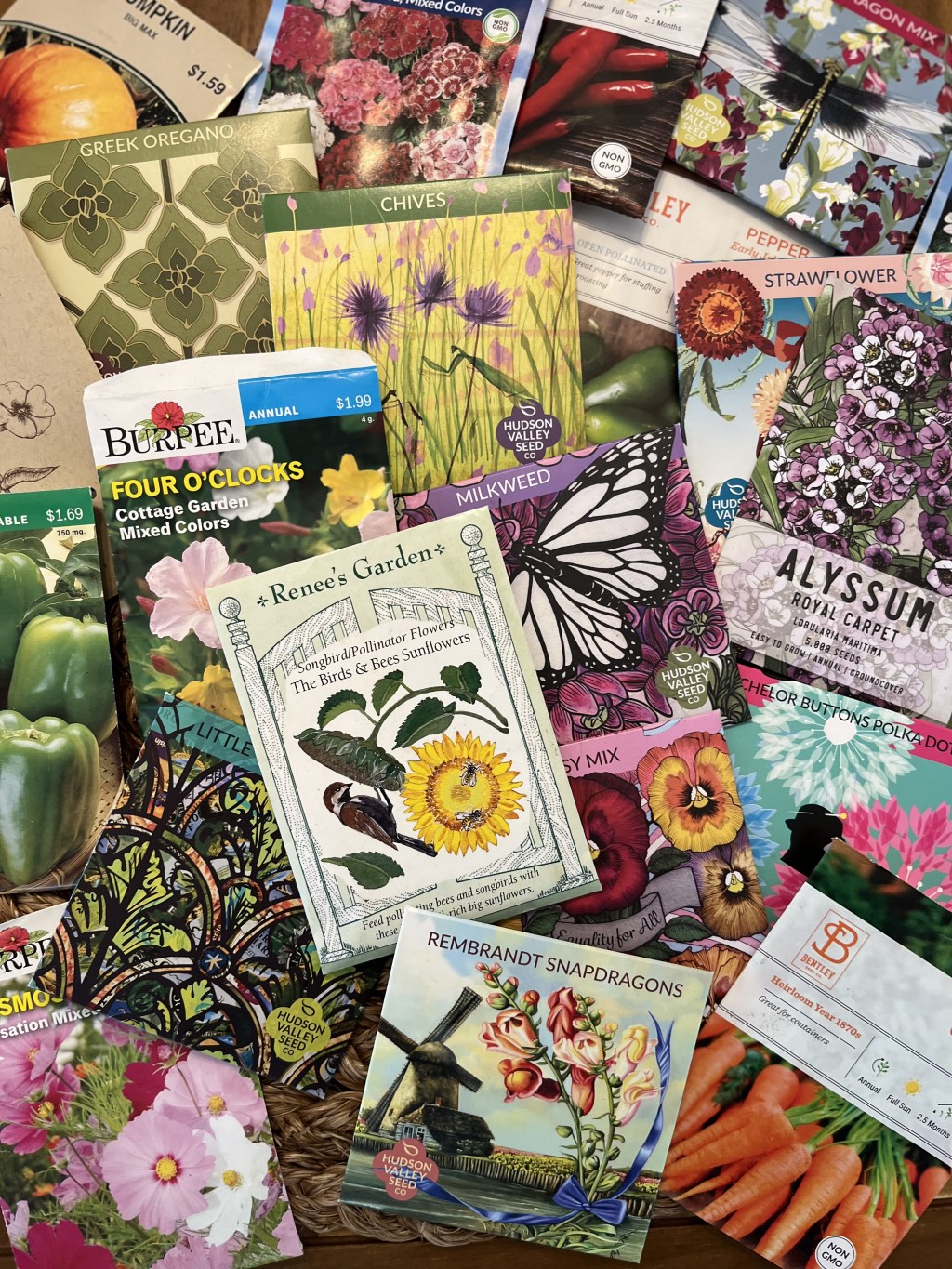
Hi Besties! So you’ve read our blog post about Starting Plants from Seeds and now you want to give it a try, but aren’t sure which seeds to pick? The sky is the limit here. I will be focusing on my own personal experiences in North Jersey (Zone 6a), but I will include links to a couple of great resources about where to find information specific to your area!
Amazon items linked throughout this post are linked using my Amazon Associate account. As an Amazon Associate I earn from qualifying purchases and really appreciate your support!
Choosing Seeds to Start Indoors
Before we get started, I would consider starting a journal to track which seeds you pick, when you plant them and whether they are successful. I started with an excel spreadsheet on my computer, but found it easier to just keep a note in the Notes App on my phone. This will make it much easier when you are deciding what to start next year! When choosing seeds to start indoors, consider the amount of time and space you have available, as well as your personal preferences. I know when I walk into a garden center and see the racks of seed packets, it’s exciting and overwhelming because I want to try them all and I want the ones that I try to be successful. If this is your first time trying seeds, I would pick just a few packets and give them a try, you can always try again! Some plants that I have found are really easy to grow from seeds are:
- Marigolds
- Cleome
- Morning Glory
- Zinnia
- Basil
- Lettuce
- Cucumbers – keep in mind that these need a trellis to climb once they start growing
- Beans – you can try bush beans if you don’t have a trellis
- Squash
- Nasturtium (and they’re edible!)
First I would consider whether you would like to grow flowers, vegetables, or a mix of both! Most vegetables love full sun, so if you don’t have many spots that get nice full sun, I would stick to flowers that can tolerate shade like impatiens or begonia (these are easier to start from bulbs) or leafy green veggies like lettuce, spinach, radish and herbs.
Some seeds are much better at being directly sown in the ground, either because they’re quick growing or because their roots are very sensitive to being transplanted. For example, I have found that poppies, cosmos, portulaca (I LOVE portulaca, I think they’re so cute), and marigolds work well by simply sprinkling the seeds out in the garden in the spring and waiting for them to grow!
Gardeners in different regions, such as the south, may not have these restrictions, but in NJ you can’t move most vegetable and tender annuals outside until the middle or end of May, which definitely shortens the growing season! So I personally like to get a head start on all of my veggies by starting them indoors. I also typically start pansies indoors, because otherwise they flower so late in the season. Check out my blog post about Starting Plants from Seed for step-by-steps directions!
When to Start Seeds Indoors
The timing for starting seeds indoors in NJ depends on the plant’s growth rate and the average last frost date in your area. You can find your average last frost date in your area here! As a general rule, seeds should be started indoors 6-8 weeks before the last expected frost date. For example, if your last expected frost date is April 15, you should start your seeds indoors around February 15.
A comprehensive list of seeds that can be started in NJ and the date they can be started indoors is included below. If you’re not sure about the difference between annuals, biennials and perennials, check out my post Introduction to Gardening: An Overview, which includes a glossary of commonly used gardening terms!
| Annuals | |
| Plant | Weeks before Last Frost |
| Alyssum | 6 – 8 weeks |
| Asters | 8 – 10 weeks |
| Bachelor’s buttons | 4 – 6 weeks |
| Begonias | 12 – 14 weeks |
| Calendula | 6 – 8 weeks |
| Celosia | 6 – 8 weeks |
| Cleome | 6 – 8 weeks |
| Coleus | 10 – 12 weeks |
| Cosmos | 4 – 6 weeks |
| Dahlia | 6 – 8 weeks |
| Dusty miller | 12 – 14 weeks |
| Gazania | 10 – 12 weeks |
| Geraniums | 12 – 14 weeks |
| Impatiens | 12 – 14 weeks |
| Lantana | 10 – 12 weeks |
| Larkspur | 6 – 8 weeks |
| Lobelia | 10 – 12 weeks |
| Marigolds | 4 – 6 weeks |
| Morning glories & Cardinal Climbers | 4 – 6 weeks |
| Nasturtiums | 4 – 6 weeks |
| Nicotiana | 10 – 12 weeks |
| Pansies | 8 – 10 weeks |
| Petunias | 10 – 12 weeks |
| Phlox | 6 – 8 weeks |
| Portulaca | 8 – 10 weeks |
| Salvia | 8 – 10 weeks |
| Snapdragons | 10 – 12 weeks |
| Sunflowers | 2 – 4 weeks |
| Sweet peas | 6 – 8 weeks |
| Verbena | 10 – 12 weeks |
| Vinca | 12 – 14 weeks |
| Zinnias | 4 – 6 weeks |
| Biennials | |
| Plant | Weeks before Last Frost |
| Foxglove | 8 – 10 weeks |
| Canterbury bells | 8 – 10 weeks |
| Hollyhock | 8 – 10 weeks |
| Sweet William | 8 – 10 weeks |
| Wallflower | 8 – 10 weeks |
| Evening primrose | 6 – 8 weeks |
| Mullein | 8 – 10 weeks |
| Queen Anne’s lace | 8 – 10 weeks |
| Perennials | |
| Plant | Weeks before Last Frost |
| Achillea | 6 – 8 weeks |
| Agastache | 6 – 8 weeks |
| Astilbe | 8 – 10 weeks |
| Baptisia | 8 – 10 weeks |
| Bee balm | 8 – 10 weeks |
| Black – eyed Susan | 6 – 8 weeks |
| Blanket flower | 8 – 10 weeks |
| Bleeding heart | 12 – 14 weeks |
| Butterfly weed | 8 – 10 weeks |
| Campanula | 8 – 10 weeks |
| Cardinal flower | 8 – 10 weeks |
| Coneflower | 6 – 8 weeks |
| Coral bells | 12 – 14 weeks |
| Coreopsis | 8 – 10 weeks |
| Daylily | 8 – 10 weeks |
| Delphinium | 12 – 14 weeks |
| Dianthus | 8 – 10 weeks |
| Echinacea | 6 – 8 weeks |
| Gaillardia | 8 – 10 weeks |
| Geranium | 12 – 14 weeks |
| Helenium | 8 – 10 weeks |
| Hellebore | 12 – 14 weeks |
| Hosta | 12 – 14 weeks |
| Iris | 12 – 14 weeks |
| Lavender | 12 – 14 weeks |
| Liatris | 8 – 10 weeks |
| Lupine | 12 – 14 weeks |
| Monarda | 8 – 10 weeks |
| Nepeta | 8 – 10 weeks |
| Peony | 12 – 14 weeks |
| Perennial salvia | 8 – 10 weeks |
| Phlox | 8 – 10 weeks |
| Rudbeckia | 6 – 8 weeks |
| Sedum | 12 – 14 weeks |
| Shasta daisy | 6 – 8 weeks |
| Veronica | 8 – 10 weeks |
| Yarrow | 6 – 8 weeks |
| Vegetables & Herbs | |
| Plant | Weeks before Last Frost |
| Asparagus | 12 – 14 weeks |
| Basil | 6 – 8 weeks |
| Beans | 2 – 4 weeks |
| Beets | 4 – 6 weeks |
| Broccoli | 6 – 8 weeks |
| Brussels sprouts | 8 – 10 weeks |
| Cabbage | 6 – 8 weeks |
| Carrots | Direct sow outdoors – root vegetables are difficult to transplant |
| Cauliflower | 6 – 8 weeks |
| Celery | 8 – 10 weeks |
| Chard | 2 – 4 weeks |
| Chives | 6 – 8 weeks |
| Cilantro | 2 – 4 weeks |
| Collards | 2 – 4 weeks |
| Corn | 2 – 4 weeks |
| Cucumber | 2 – 4 weeks |
| Dill | 4 – 6 weeks |
| Eggplant | 8 – 10 weeks |
| Fennel | 8 – 10 weeks |
| Garlic | Direct sow outdoors – root vegetables are difficult to transplant |
| Kale | 4 – 6 weeks |
| Kohlrabi | 6 – 8 weeks |
| Leeks | 10 – 12 weeks |
| Lettuce | 6-8 weeks, it can be set out about 2 weeks before last frost |
| Melons | 2 – 4 weeks |
| Mustard greens | Direct sow outdoors |
| Okra | 8 – 10 weeks |
| Onions | Direct sow outdoors – root vegetables are difficult to transplant |
| Parsley | 8 – 10 weeks |
| Parsnips | Direct sow outdoors – root vegetables are difficult to transplant |
| Peas | 6 – 8 weeks |
| Peppers | 8 – 10 weeks |
| Potatoes | Direct sow outdoors – root vegetables are difficult to transplant |
| Pumpkins | 2 – 4 weeks |
| Radicchio | 8 – 10 weeks |
| Radishes | Direct sow outdoors – root vegetables are difficult to transplant |
| Rhubarb | 8 – 10 weeks |
| Rosemary | 10 – 12 weeks |
| Sage | 6 – 8 weeks |
| Scallions | 8 – 10 weeks |
| Spinach | 6 – 8 weeks |
| Squash | 2 – 4 weeks |
| Sweet potatoes | 12 – 14 weeks |
| Sweet corn | 2 – 4 weeks |
| Swiss chard | 2 – 4 weeks |
| Thyme | 2 – 4 weeks |
| Tomatoes | 6 – 8 weeks |
| Turnips | Direct sow outdoors – root vegetables are difficult to transplant |
| Watermelons | 2 – 4 weeks |
| Zucchini | 4 – 6 weeks |
In conclusion, starting seeds indoors is a great way to get a head start on your garden and ensure you have a harvest all season long. Remember, this should be FUN! Try not to overthink it. Seeds and plants are more resilient than you think. Happy planting!
 Besties Garden
Leave a comment