
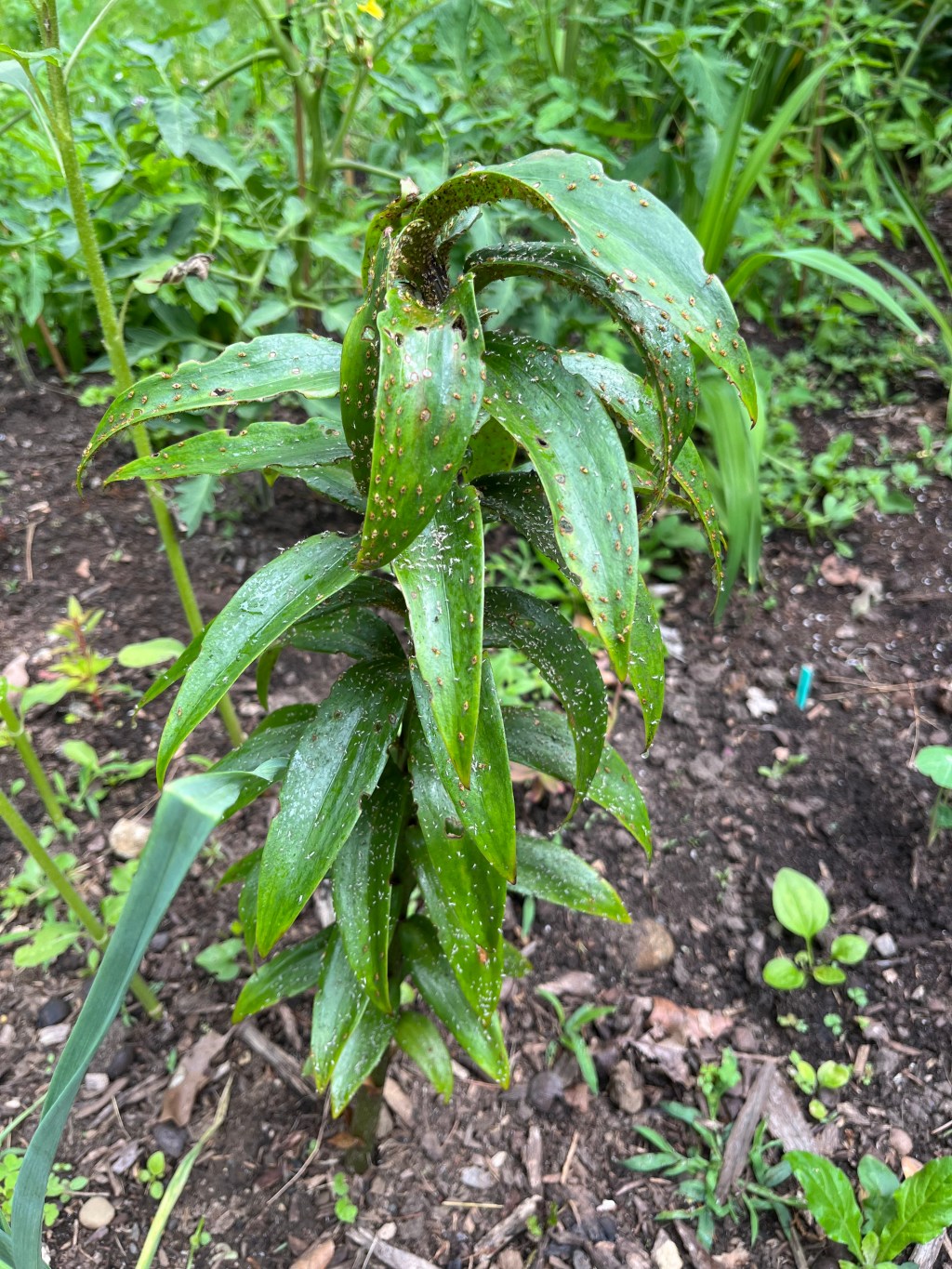
Hi Besties! I don’t think I’ve mentioned this before, but aphids drive me CRAZY!! It always seems like one day my plants are happy and free and the next they are COVERED in aphids, I don’t get it! Aphids are tiny, soft-bodied pests that can rapidly multiply and wreak havoc on your plants if left unchecked. I have been finding aphids on all different varieties of plants including squash, cucumbers, lilies, poppies and tomatoes. In this post, I will explain what aphids look like and show a few examples from my garden. Then I’ll describe the various methods to effectively eliminate aphids while considering the impact of these methods on the plants you are applying them to.
Identifying Aphids
Aphids are small insects that come in various colors, including green, black, yellow, or brown. They have pear-shaped bodies, measuring around 1/8 inch in length. Aphids release defensive secretions when threatened and are typically found clustered on the undersides of leaves, stems, or buds, often forming large colonies. They reproduce rapidly, so make sure to regularly check your plants and try to act early at the first signs of aphids. I try to go out once each morning and evening to take a look around at my plants for signs of aphids.
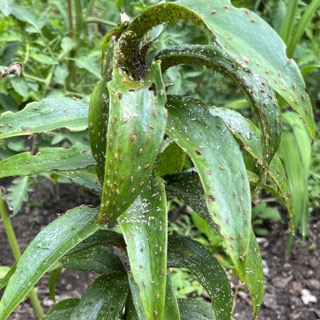
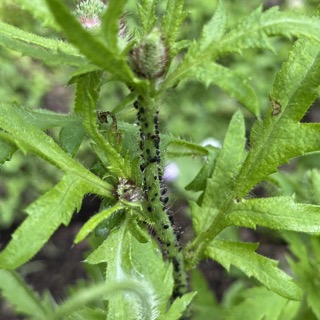
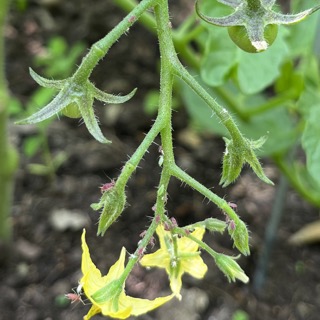
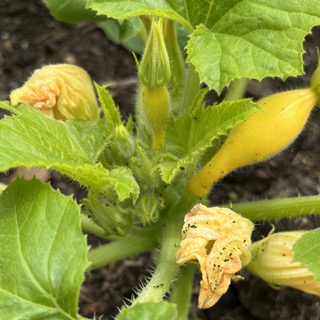
Below are a few photos of aphids that I took in my garden so you can see examples of what they look like:
Amazon items linked throughout this post are linked using my Amazon Associate account. As an Amazon Associate I earn from qualifying purchases and really appreciate your support!
Remedies to Eliminate Aphids
Below I will go through a list of ways to try to eliminate the aphids in your garden. Before I start though, if you have leaves that are completely infested with aphids, just remove them (use clippers and cut them off or just pinch them off with your fingers). Dispose of them far away from the infected plants. See below for other methods of removing aphids:
- Blast of Water:
- The first method to try is to simply spray the infected plants with a strong blast of water. (This is what my mom always says to do.) A strong stream of water dislodges aphids from plants, physically removing them and disrupting their feeding. This method is particularly effective when aphid populations are still relatively low. I personally generally need to combine this with another method, but when you first spot aphids, it definitely doesn’t hurt to run and grab the hose and give them a good spray.
- The first method to try is to simply spray the infected plants with a strong blast of water. (This is what my mom always says to do.) A strong stream of water dislodges aphids from plants, physically removing them and disrupting their feeding. This method is particularly effective when aphid populations are still relatively low. I personally generally need to combine this with another method, but when you first spot aphids, it definitely doesn’t hurt to run and grab the hose and give them a good spray.
- Handpicking Aphids
- Manual removal of aphids by hand is a practical and accessible method to control their populations. With a gloved hand, gently wipe and brush off the aphids from the affected leaf or stem. Start from the base and work your way up towards the tip. Be cautious not to damage the plant. Once you’ve removed the aphids from the plant, either squash them or drop them into a container of soapy water to ensure they are effectively eliminated. This is especially helpful when the infestation is localized or during the early stages of an outbreak, so this method may need to be combined with another method.
- Manual removal of aphids by hand is a practical and accessible method to control their populations. With a gloved hand, gently wipe and brush off the aphids from the affected leaf or stem. Start from the base and work your way up towards the tip. Be cautious not to damage the plant. Once you’ve removed the aphids from the plant, either squash them or drop them into a container of soapy water to ensure they are effectively eliminated. This is especially helpful when the infestation is localized or during the early stages of an outbreak, so this method may need to be combined with another method.
- Ladybugs and Lacewings:
- Ladybugs and lacewings are natural predators of aphids. They feed on aphids and help control their populations. Introducing these beneficial insects into your garden provides long-term and sustainable aphid control. It is also a very safe option as you are not using any chemicals on your vegetable plants. You can encourage ladybugs to come to your garden by planting plants that they like such as dill, marigold, cilantro, and alyssum. My neighbor swears they are drawn to the color yellow and that tying yellow ribbons around your garden will attract them. You can also buy live ladybugs at your local garden center or order them online. Release ladybugs in the early evening, preferably when the weather is cool and during a rainy stretch.
- Ladybugs and lacewings are natural predators of aphids. They feed on aphids and help control their populations. Introducing these beneficial insects into your garden provides long-term and sustainable aphid control. It is also a very safe option as you are not using any chemicals on your vegetable plants. You can encourage ladybugs to come to your garden by planting plants that they like such as dill, marigold, cilantro, and alyssum. My neighbor swears they are drawn to the color yellow and that tying yellow ribbons around your garden will attract them. You can also buy live ladybugs at your local garden center or order them online. Release ladybugs in the early evening, preferably when the weather is cool and during a rainy stretch.
- Neem Oil:
- Neem oil contains compounds that disrupt aphids’ feeding and reproductive processes. It acts as an insect growth regulator and repellant, reducing aphid populations. Since neem oil only targets bugs who chew on leaves, neem oil is generally safe to use around butterflies, ladybugs, and most other beneficial insects. Neem oil is a natural derivative of the neem tree, so it is organic and biodegradable. It is highly effective and is generally safe for use on most vegetables, just be careful not to use too much. To use Neem Oil, dilute it with water as per instructions and apply to affected plants. I generally mix in a spray bottle and spray onto the plants. I also generally add in a tiny bit of dish soap to emulsify the mixture, though this probably makes the mixture no longer organic. One warning though – Neem Oil smells absolutely DISGUSTING. I was not expecting that the first time I used it, it literally made me gag and I thought I was going to throw up -it’s that bad.
- Neem oil contains compounds that disrupt aphids’ feeding and reproductive processes. It acts as an insect growth regulator and repellant, reducing aphid populations. Since neem oil only targets bugs who chew on leaves, neem oil is generally safe to use around butterflies, ladybugs, and most other beneficial insects. Neem oil is a natural derivative of the neem tree, so it is organic and biodegradable. It is highly effective and is generally safe for use on most vegetables, just be careful not to use too much. To use Neem Oil, dilute it with water as per instructions and apply to affected plants. I generally mix in a spray bottle and spray onto the plants. I also generally add in a tiny bit of dish soap to emulsify the mixture, though this probably makes the mixture no longer organic. One warning though – Neem Oil smells absolutely DISGUSTING. I was not expecting that the first time I used it, it literally made me gag and I thought I was going to throw up -it’s that bad.
- Companion Planting:
- Companion planting with marigolds or nasturtiums helps repel aphids. These plants emit strong scents that deter aphids, reducing the risk of infestation. While not foolproof, it adds an extra layer of defense against aphids. Honestly, I have marigolds AND nasturtiums planted as a border around my vegetable garden and throughout the garden among the plants, and my plants are still covered in aphids, so I will say that this method alone is likely not sufficient enough to keep away the aphids, but is a great addition to other lines of defense.
- Companion planting with marigolds or nasturtiums helps repel aphids. These plants emit strong scents that deter aphids, reducing the risk of infestation. While not foolproof, it adds an extra layer of defense against aphids. Honestly, I have marigolds AND nasturtiums planted as a border around my vegetable garden and throughout the garden among the plants, and my plants are still covered in aphids, so I will say that this method alone is likely not sufficient enough to keep away the aphids, but is a great addition to other lines of defense.
- Insecticidal Soap:
- Insecticidal soap works by suffocating and dehydrating aphids upon contact. It coats their bodies, blocking their breathing pores and causing them to die. It is a potent and widely-used remedy against aphids. While it does work, I try really hard to avoid insecticidal soap as it is a broad-spectrum insecticide, meaning it can harm beneficial insects along with the aphids. Be careful to minimize the impact on beneficial insects by using insecticidal soap selectively and avoiding direct contact with them. With that being said, insecticidal soap is highly effective and is generally safe for people, even when used on vegetable plants, but avoid use during plant stress or high temperatures. Apply an insecticidal soap following the product instructions.
- Insecticidal soap works by suffocating and dehydrating aphids upon contact. It coats their bodies, blocking their breathing pores and causing them to die. It is a potent and widely-used remedy against aphids. While it does work, I try really hard to avoid insecticidal soap as it is a broad-spectrum insecticide, meaning it can harm beneficial insects along with the aphids. Be careful to minimize the impact on beneficial insects by using insecticidal soap selectively and avoiding direct contact with them. With that being said, insecticidal soap is highly effective and is generally safe for people, even when used on vegetable plants, but avoid use during plant stress or high temperatures. Apply an insecticidal soap following the product instructions.
- Homemade Garlic Spray:
- Garlic contains compounds that repel aphids. When infused into a spray and applied to plants, it creates an unfavorable environment for aphids. I have this last on the list as its effectiveness varies and regular reapplication is often necessary. It is generally safe for use in the vegetable garden. Check out this link to see how to make a garlic garden spray.
Conclusion
Aphids are common garden pests that can damage a variety of plants. By acting early to use the appropriate remedies, you can work to eliminate aphids from your garden. Remember to consider the safety of remedies for vegetables and carefully follow instructions. Good luck! Let me know how these remedies work for you and if there are any other ones that you suggest! Happy gardening!
 Besties Garden
Leave a comment