
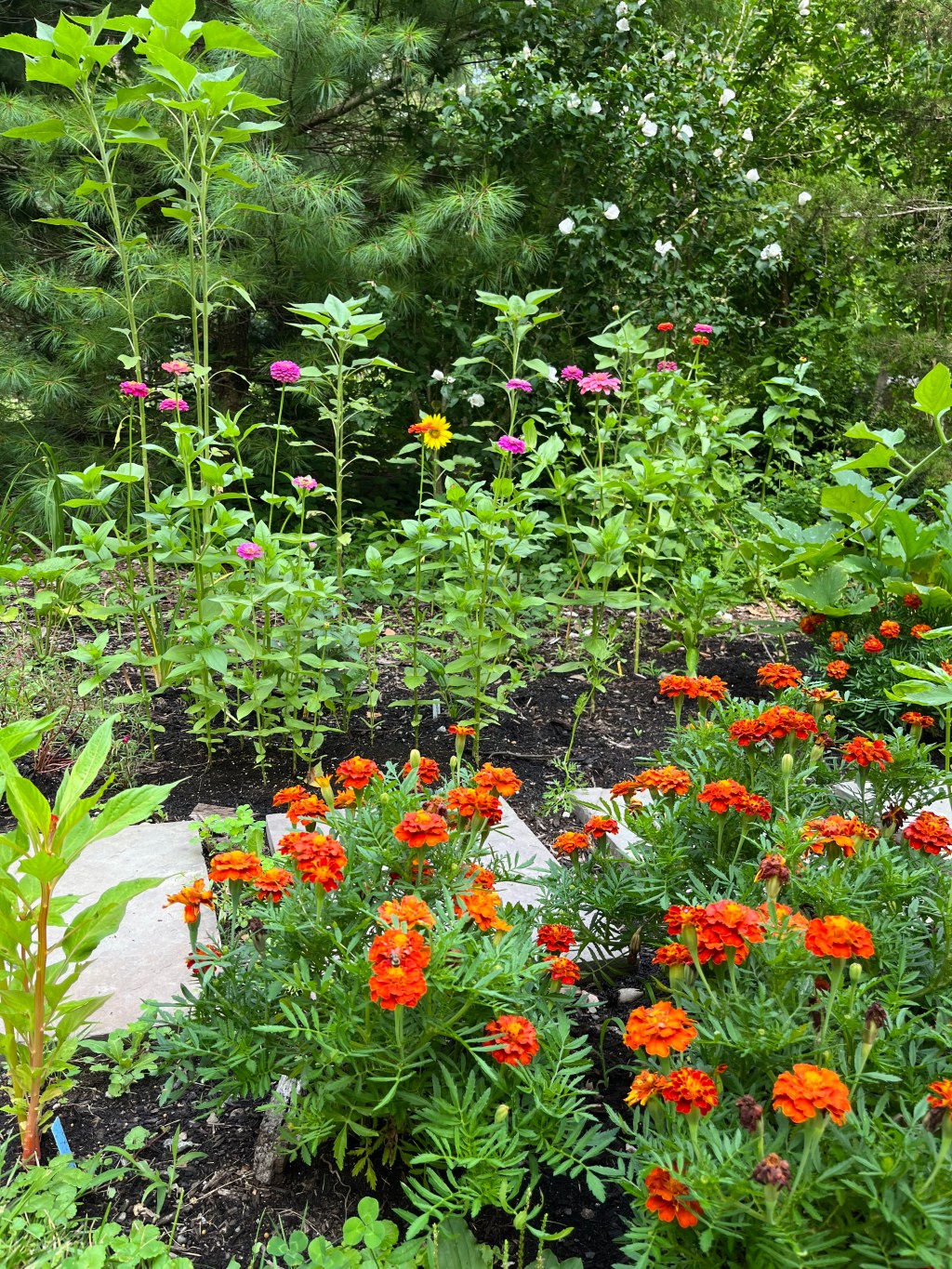
Hi Besties! I stumbled upon companion planting many years ago when I was living in a city and wanted to have many different types of plants growing in a very small space. I learned that not only CAN you plant many different types of plants near each other, but it can actually be BENEFICIAL! Companion planting is a gardening technique that involves strategically placing certain plants together to enhance their growth, repel pests, and increase the productivity of your garden. I also personally just think it looks better having a variety of plants planted together, rather than having separate sections in your garden for each type of plant. In this post, I’ll provide some insights into my experience with companion planting, including providing some benefits and tips. I’ll also provide you with an extensive list of companion plants and plants that should not be planted together.
The Benefits of Companion Planting
Companion planting has been used for centuries as a way to improve the health and yield of crops. There are many benefits to companion planting, including:
- Natural pest control: Some plants have natural abilities to repel pests, while others attract beneficial insects that prey on garden pests. By pairing these plants together, you can create a natural defense system in your garden, reducing the need for chemical pesticides. For example, planting marigolds alongside tomatoes helps repel aphids and other harmful insects.
- Improved Pollination: Certain plants, such as flowers, attract pollinators like bees and butterflies. When these pollinators visit your garden, they facilitate the transfer of pollen, leading to better fruit set and increased yields. Consider planting flowers like marigold, nasturtium, zinnias or cosmos near your vegetable crops to attract pollinators and enhance the overall productivity of your garden.
- Improved growth: Some plants have nutrient requirements that are complementary to each other, so they can grow better when planted together. This is explained in a bit more detail below.
- Increased yield: Companion planting can help maximize the use of garden space, resulting in a greater yield of crops.
- Enhanced Flavor and Growth: Companion planting can also impact the taste and growth of certain plants. For instance, growing basil near tomatoes not only repels pests but also enhances the flavor of the tomatoes. Similarly, planting beans alongside corn provides nitrogen to the soil, benefiting the nutrient-hungry corn plants.
- Soil improvement: Certain plants can improve soil health by fixing nitrogen or adding organic matter.
Companion Plants: Allies in the Garden
Companion plants are mutually beneficial when planted in close proximity. Here are some examples of companion plants and the benefits they provide:
- Beans and Corn:
- Beans fix nitrogen in the soil, benefiting the nitrogen-hungry corn plants.
- Corn provides support for beans to climb.
- Beans and Cucumbers:
- Beans enrich the soil with nitrogen, benefiting the growth of cucumbers.
- Cucumbers provide a living trellis for beans to climb, maximizing garden space and improving airflow.
- Cabbage and Dill:
- Dill attracts beneficial insects that prey on cabbage pests like aphids and cabbage loopers.
- Dill improves the flavor of cabbage.
- Carrots and Onions:
- Onions repel carrot flies, protecting your carrots from infestation.
- Onions enhance the flavor of carrots.
- Cucumbers and Corn:
- Corn provides shade and structural support for cucumber plants.
- Cucumbers help suppress weeds around corn plants.
- Eggplant and Beans:
- Beans enrich the soil with nitrogen, benefiting eggplant growth.
- Eggplant provides shade for beans and helps retain soil moisture.
- Lettuce and Radishes:
- Radishes act as a natural repellent for cucumber beetles, protecting lettuce plants.
- Radishes help break up compacted soil, improving root growth for lettuce.
- Peppers and Basil:
- Basil enhances the flavor of peppers.
- Basil repels pests like tomato hornworms, benefiting pepper plants.
- Potatoes and Beans:
- Beans provide nitrogen to the soil, benefiting potato growth and tuber development.
- Potatoes provide a natural mulch, suppressing weeds around beans.
- Pumpkins and Corn:
- Corn provides shade and support for sprawling pumpkin vines.
- Pumpkins help suppress weeds around corn plants.
- Radishes and Carrots:
- Radishes act as a natural repellent for carrot flies, protecting carrots from infestation.
- Radishes help break up soil and create channels for carrot roots.
- Spinach and Strawberries:
- Strawberries act as a natural ground cover, suppressing weeds around spinach plants.
- Spinach provides shade and protection for strawberry roots.
- Squash and Corn:
- Corn provides shade and support for sprawling squash vines.
- Squash acts as a living mulch, suppressing weeds and conserving soil moisture around corn.
- Tomatoes and Basil:
- Basil enhances the flavor of tomatoes and helps repel pests like tomato hornworms.
- Tomatoes provide shade for basil plants and protect them from extreme heat.
- Herbs (Basil, Rosemary, Chives) and Tomatoes, Peppers, Carrots:
- Basil benefits the growth and flavor of tomatoes and peppers.
- Rosemary improves the flavor of cabbage and beans.
- Chives repel pests and improve the flavor of carrots and tomatoes.
- Beets and Onions:
- Onions repel pests that can harm beets, such as aphids and leaf miners.
- Beets help suppress weeds around onion plants.
- Broccoli and Dill:
- Dill attracts beneficial insects that prey on broccoli pests like cabbage worms.
- Dill enhances the flavor of broccoli.
- Brussels Sprouts and Sage:
- Sage repels pests that can damage Brussels sprouts, such as cabbage loopers and cabbage moths.
- Brussels sprouts provide shade and protection for sage plants.
- Cauliflower and Celery:
- Celery repels pests like cabbage worms, protecting cauliflower from infestation.
- Cauliflower provides a natural shade for celery, preventing it from bolting.
- Celery and Leeks:
- Leeks repel pests like carrot flies and onion maggots, protecting celery plants.
- Celery provides a natural shade for leeks, preventing them from becoming bitter.
- Chard and Beans:
- Beans enrich the soil with nitrogen, benefiting chard growth and leaf production.
- Chard provides shade and protection for bean plants.
- Cilantro and Anise:
- Cilantro and anise attract beneficial insects that prey on pests harmful to each other.
- They enhance each other’s growth and flavor.
- Kale and Onions:
- Onions repel pests that can harm kale, such as aphids and cabbage worms.
- Kale provides a natural shade for onions, preventing weed growth around them.
- Melons and Corn:
- Corn provides vertical support for melon vines, maximizing garden space.
- Melons act as a living mulch, suppressing weeds and conserving soil moisture around corn.
- Onions and Beets:
- Onions repel pests that can damage beets, such as aphids and leaf miners.
- Beets help suppress weeds around onion plants.
- Peas and Carrots:
- Peas fix nitrogen in the soil, benefiting the growth of carrots.
- Carrots help break up soil for easier pea root penetration.
- Radicchio and Onions:
- Onions repel pests that can damage radicchio, such as aphids and flea beetles.
- Radicchio provides shade and protection for onion bulbs.
- Rosemary and Cabbage:
- Rosemary repels pests like cabbage loopers and cabbage worms, protecting cabbage plants.
- Cabbage provides shade and protection for rosemary plants.
- Sage and Carrots:
- Sage repels pests that can harm carrots, such as carrot flies and aphids.
- Carrots help break up soil, promoting healthy root development for sage.
- Strawberries and Spinach:
- Spinach acts as a natural ground cover, suppressing weeds around strawberry plants.
- Strawberries provide shade and protection for spinach leaves.
- Thyme and Cabbage:
- Thyme repels pests like cabbage loopers and cabbage worms, protecting cabbage plants.
- Cabbage provides shade and protection for thyme plants.
- Zucchini and Corn:
- Corn provides shade and support for sprawling zucchini vines.
- Zucchini helps suppress weeds around corn plants.
- Marigolds and Vegetables:
- Marigolds release a strong scent that deters many common garden pests, including aphids, nematodes, and whiteflies.
- They attract beneficial insects like ladybugs and parasitic wasps, which prey on pests harmful to vegetables.
- Marigolds help improve soil health by suppressing harmful soil-borne pathogens and nematodes.
- Planting marigolds among vegetables can create a visually appealing garden with contrasting colors and textures.
- Marigolds and Cabbage:
- Marigolds deter pests like cabbage worms and cabbage loopers, protecting cabbage plants.
- Cabbage provides a natural shade for marigolds, preventing them from bolting.
- Nasturtiums and Cucumbers:
- Nasturtiums act as a trap crop, attracting pests away from cucumber plants.
- Cucumbers provide support for climbing nasturtium vines.
- Borage and Strawberries:
- Borage attracts beneficial insects that prey on pests harmful to strawberries.
- Strawberries provide shade and protection for borage plants.
- Sunflowers and Cucumbers:
- Sunflowers provide shade and support for climbing cucumber plants.
- Cucumbers help suppress weeds around sunflower plants.
- Chamomile and Cabbage:
- Chamomile enhances the growth and flavor of cabbage.
- Cabbage provides shade and protection for chamomile flowers.
- Oregano and Cucumbers:
- Oregano repels pests that can harm cucumbers, such as cucumber beetles.
- Cucumbers help suppress weed growth around oregano plants.
- Dill and Cabbage:
- Dill attracts beneficial insects that prey on pests harmful to cabbage.
- Cabbage provides shade and protection for dill plants.
- Tarragon and Eggplant:
- Tarragon enhances the flavor of eggplant.
- Eggplant provides shade and protection for tarragon plants.
Plants that Don’t Play Well Together: Incompatible Pairings
Just as some plants thrive together, others can hinder each other’s growth or attract pests and diseases. Here are some examples of plants that should not be planted together:
- Potatoes and Tomatoes: Both plants are susceptible to late blight and other similar diseases.
- Cucumbers and Aromatic Herbs: Aromatic herbs like sage and rosemary can inhibit the growth of cucumbers.
- Cucumbers and Melons: These plants can attract the same pests, such as cucumber beetles and squash bugs.
- Beans and Onions/Garlic: Onions and garlic can stunt the growth of beans.
- Brassicas and Strawberries: Brassicas (e.g., broccoli, cabbage) can attract cabbage worms, which can also damage strawberry plants.
- Sunflowers and Potatoes: Sunflowers can produce chemicals that inhibit the growth of potatoes.
- Peppers and Fennel: Fennel can negatively impact the growth and flavor of peppers.
- Beans and Chives/Garlic/Onions: The strong aroma of these plants can deter beneficial insects that help pollinate beans.
- Mint and Other Plants: Mint is a vigorous grower that can easily take over a garden bed, so it’s best to plant it in a container or in a separate area from other plants.
Companion Planting Resources and Tips
Now that you have a broad understanding of companion planting, here are some additional resources and tips to help you get started:
- Research specific companion plants for the crops you want to grow to ensure optimal pairings. I have tried to include as many as I could above, but this list is certainly not exhaustive!
- Consider using companion planting charts and guides, which provide comprehensive information on plant relationships.
- Companion Planting for Beginners has a ton of information if you are interested in learning more! I do not personally know the author and was not asked to promote it, but as an Amazon Associate I earn from qualifying purchases.
- Rotate crops each year to prevent the buildup of pests and diseases and to restore nutrients in the soil.
- Experiment and observe your garden to discover what works best for your specific conditions and plant varieties. If something doesn’t work well in your area one year, please try not to get discouraged and try something new next year!
- Embrace diversity in your garden by incorporating a variety of companion plants to promote overall ecosystem health. Don’t be afraid to mix flowers and vegetables together!
Companion planting has really changed the way I view gardening, and it has been fascinating learning about different plants relationships with each other. By harnessing the power of plant relationships, you can enhance your garden’s health, increase yields, and reduce the need for chemical interventions. So, grab your gardening gloves and get ready to unlock the potential of companion planting in your own backyard! Happy Gardening!


Leave a Reply